
Buying Guides
Hooded Towel vs Regular Towel for Babies: Which Is Better?
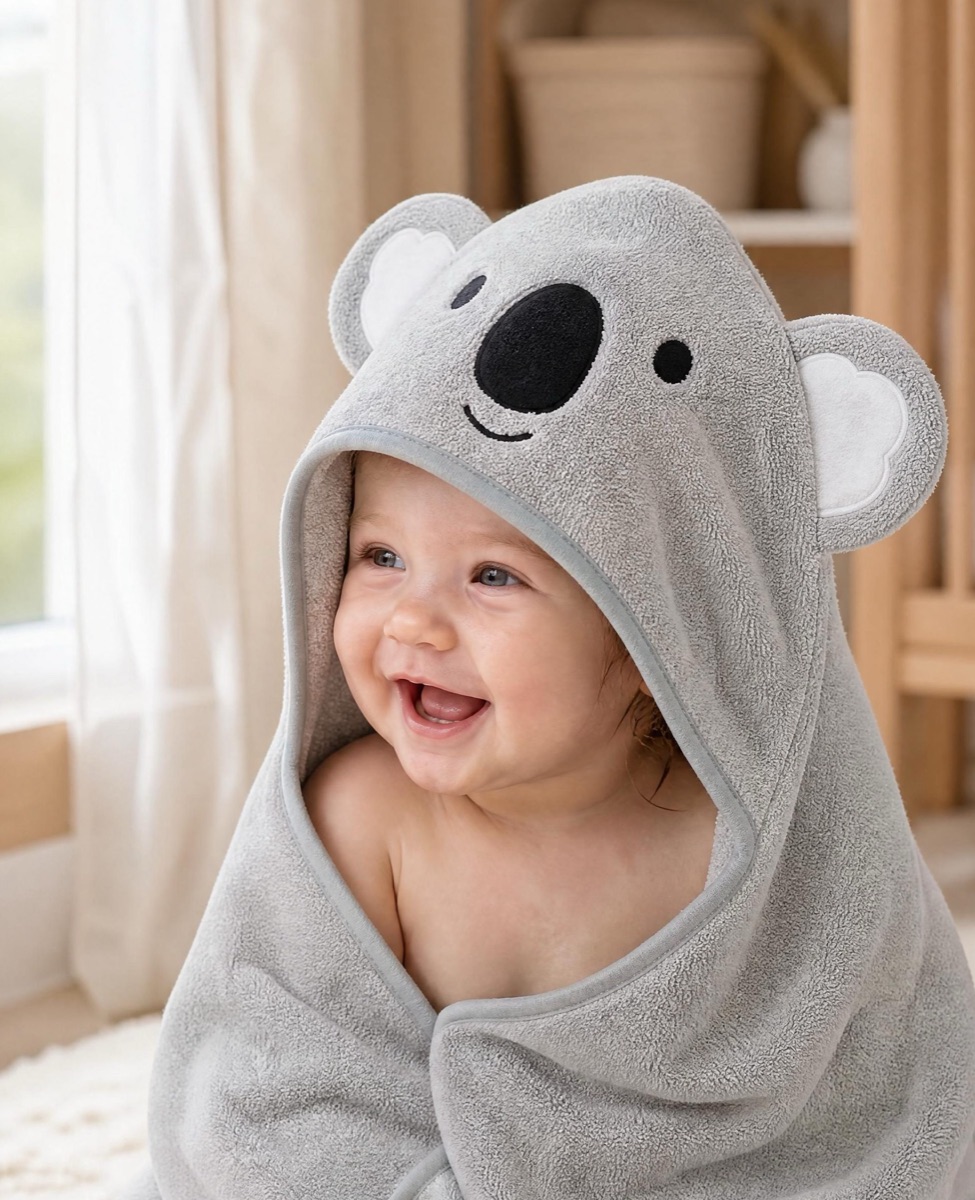
A regular towel dries a baby perfectly well, but a hooded towel does two extra things at the moment they matter. It covers a wet head the second you lift the baby from the bath, keeping the cosiest part warm, and it stays put hands-free while you dry and dress. For a newborn and the calm wind-down before sleep, the hood is the difference worth paying for; for an older, wriggly toddler a regular towel is often plenty.
A regular towel will dry a baby perfectly well. So the hooded towel versus regular towel question is really not about the drying: it comes down to two small things a hood does at the exact moment they matter. It covers a wet head the second you lift the baby out of the water, keeping the cosiest part warm, and it stays put on its own while you have both hands free to dry and dress. For a newborn, and for the quiet wind-down before sleep, that is the difference worth paying attention to.
Neither towel is wrong. This is the fair version of the comparison: what each one does well, when a regular towel is plenty, and why the hood earns its place in those first months. That place is exactly what the MiniBoo hooded towel is built for.
The moment a towel actually has to work
The test of any baby towel is not the drying itself. It is the handover: that small, slippery second when a warm, wet baby comes out of the water into open air. A wet head cools quickly, and a cold baby lets you know about it. Everything the towel does in the next minute either keeps the calm or breaks it.
A regular bath towel meets the baby at that moment as a flat rectangle. You lift, you wrap, and then you are holding the wrap closed with one hand while you reach for the other corner. It works. It just asks a little more of you, right when your hands are fullest.
What a regular towel does well
It is worth not underselling the regular towel. A good one is generous, absorbent, and endlessly useful. It doubles as a changing surface, a soft mat for tummy time, a shade over the pram. There is no hood to sit oddly once a child is older and wriggling to get away. If you already own soft, thirsty towels, a newborn will be dried perfectly well in them.
Where a regular towel asks more is coordination. It has no fixed point, so keeping a wet head covered means holding a corner in place, and a squirming baby has a real talent for shrugging cloth off a bare head.
What the hood adds
A hood turns that loose corner into a fixed one. The moment you lift the baby, the hood goes over the head and stays there, covering the warmest, most exposed part without you having to hold it. The baby is wrapped from the crown down in one movement instead of three.
That covered head is the whole point. A baby's head loses warmth quickly, so keeping it covered keeps the warmth in and the mood settled. It is a comfort thing more than anything: a cosy baby is a calmer baby, and a calmer baby makes the rest of the routine easier.
Hands-free while you dry and dress
The quieter benefit is what the hood frees up: your hands. Because the towel holds itself in place, you can pat arms and legs dry, work a nappy on, and ease the baby into pyjamas without ever leaving the head uncovered or the towel slipping off. On a cold evening, that hands-free minute is the difference between a smooth wind-down and a wet, cross baby.
Hooded vs regular, side by side
| What matters | Hooded towel | Regular towel |
|---|---|---|
| Keeps the head warm | Hood covers the head the moment you lift, and stays put | Works, but you hold a corner in place |
| Hands-free | Wraps and holds itself, so both hands are free to dry and dress | Needs a hand to keep it closed |
| Cosiness | Wraps the whole baby, crown to toes, in one movement | Cosy, but the head is easy to leave bare |
| Growing with the child | Hood and generous size stay useful for years | Useful for years, with no hood to outgrow |
When a regular towel is plenty
If you are drying an older toddler who no longer sits still to be wrapped, a regular towel is often the simpler tool. By then a child is warmer, more robust, and usually keen to run off before you have finished. The hood matters far less once the drama of the newborn bath is behind you.
The same goes for a quick top-and-tail or a splash of water on a warm afternoon. Not every dry needs a full wrap. A regular towel earns its keep for all those in-between moments.
Why the hood matters most for newborns
The hood does its best work in the first months, when a baby cannot hold much warmth on their own and the bath is a whole event. A newborn comes out of the water needing to be covered fast and kept close, and a hood lets you do both in a single, calm motion. It is also the part of the routine that flows straight into sleep, so the fewer cold, fussy interruptions, the better.
That is why a hooded towel tends to be the one parents reach for again and again in the early days, and why it makes such a thoughtful gift for a baby who has not arrived yet. There is no size or season to guess, and it is useful from the very first bath.
Choosing yours
If you want the hood for those early months, any of the MiniBoo hooded towels share the same weave underneath: 70% bamboo and 30% cotton at a dense 500 GSM, gentle enough for newborn skin and quick to draw water away. The Bear is the friendly place to begin, with a generous, easy hood. The Koala carries the same weave in a calm nursery tone.
Both come in two sizes, so there is nothing to second-guess: the 90 x 90 cm towel suits newborns up to around age 6, and the 81 x 81 cm towel up to around age 5. Each one arrives with a thank-you card whose QR code opens ten lullabies and ten bedtime stories, to carry the little one from the bath straight into sleep.
A regular towel dries a baby. A hooded one keeps the warmth in at the moment it counts, and leaves your hands free for the rest.
From the collection


Frequently asked questions
Are hooded towels better for babies than regular towels?
For newborns, usually yes, because the hood covers a wet head the moment you lift the baby out and stays put while you dry and dress with both hands free. For an older toddler who no longer sits still to be wrapped, a regular towel is often simpler. Both dry a baby well; the hood mainly helps in the early months.
Do newborns really need a hooded towel?
A newborn does not strictly need one, but the hood makes the lift-and-wrap easier and keeps the head covered and warm in one movement. That tends to mean a calmer baby and a smoother routine, which is why so many parents reach for a hooded towel in the first months.
What is the point of a hood on a baby towel?
The hood turns a loose towel corner into a fixed one, so the head stays covered without you holding it. That keeps the warmest part of the baby cosy and frees both your hands to dry the rest and get pyjamas on.
Can you use a regular towel for a newborn?
Yes. A soft, generous regular towel will dry a newborn perfectly well. You just have to hold a corner in place to keep the head covered, which asks a little more coordination when your hands are already full.
What size hooded towel do you need?
Big enough to wrap the whole baby, hood included. MiniBoo comes in two sizes: the 90 x 90 cm towel suits newborns up to around age 6, and the 81 x 81 cm towel up to around age 5.